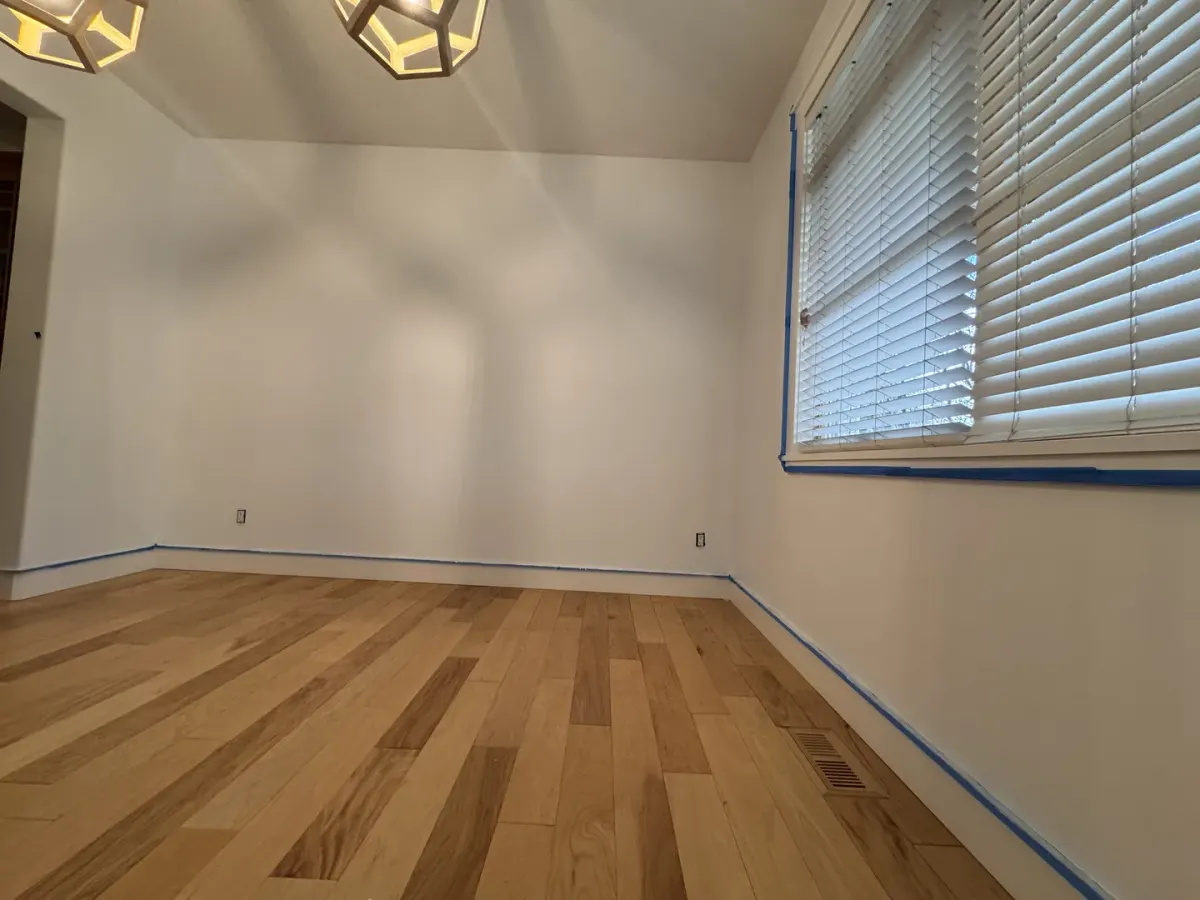
If you can, paint your new home after possession and before your furniture arrives. An empty house is usually the easiest, cleanest and fastest setting for interior painting. Every wall, ceiling, closet and baseboard is open, nothing needs to be moved or covered twice, and nobody is living around wet paint. Once the couches, beds and boxes are in, the same job becomes slower and more disruptive.
This guide is for Calgary and Airdrie buyers with a possession date on the calendar. It covers why the empty window matters, what to put first on the list, how to fit painting around flooring and moving day, and how to choose colours in a house you have not lived in yet. It is about planning, not pricing; our interior painting cost guide covers what drives the price of the work.
Why the empty-house window is worth protecting
On a lived-in paint job, a real share of the time goes into work other than painting: moving furniture to the middle of the room, covering it, protecting floors around it, working around beds and desks, and then putting everything back. In an empty home, much of that work shrinks to floor protection and masking.
- Full access. Closets, walls behind where the bed and the TV will go, and the full length of every baseboard are open. Those areas become much harder to reach once a home is furnished.
- Ceilings are easier. Ladders and planks can go anywhere in the room. Ceiling work, including ceiling repainting and texture work, is far less disruptive before the house is furnished.
- Less disruption for your family. Sanding dust, paint odour and drying time happen before the kids, pets and work-from-home desk arrive.
- A clean starting record. You know exactly which product and colour went on every surface, which makes future touch-ups and repairs much simpler.
The trade-off is timing. The window is usually short, and it is shared with movers, flooring installers and anyone else you have booked. That is why the plan matters more than the paint.
What to paint first when everything is on the table
Not everything has to happen before move-in. Some work is far easier in an empty home; some can reasonably wait for a later phase. Use this to decide where the empty window is best spent.
| Surface or task | Best before move-in? | Why |
|---|---|---|
| Ceilings and popcorn ceiling removal | Yes, highest priority | Overhead work and texture removal are messy and need open floor space. Very disruptive once furnished. |
| Bedrooms and closets | Yes | Beds, dressers and full closets are the hardest things to work around later. |
| Main living areas and hallways | Yes, if the budget allows | High-traffic walls take the most wear, so a durable, washable finish pays off here first. |
| Trim, doors and baseboards | Strongly recommended | Full-length baseboards are easiest to reach and protect with no furniture against them. |
| Feature or accent walls | Can wait | Easy to add later once you know how you use the room and where the furniture sits. |
| Garage, basement storage, utility rooms | Can wait | Usually lower priority and simple to do in a later phase. |
We normally complete ceiling work first, then paint the trim and doors before finishing the walls. The exact sequence depends on the agreed scope and application method. Our article on why painters paint ceilings first explains why the ceiling comes first.
Builder-grade paint in newer Calgary and Airdrie homes
Many newer homes in Calgary and Airdrie come with builder-grade flat paint on the walls. It is chosen because it is inexpensive and hides small drywall flaws, but it has two drawbacks that new owners notice quickly.
It scuffs and does not wash well. Moving day alone can leave marks along hallways and stairwells, and flat builder paint often looks worse after scrubbing. Our guide on how to clean painted walls explains why a lower-sheen wall can turn shiny or patchy when it is rubbed.
Touch-ups often show. Even with the original colour, patches can flash or look different in certain light. We explain why in why paint touch-ups do not always match.
Repainting before you move in lets you choose a better product and a sheen suited to each room: something more durable in hallways and kids’ rooms, and a finish that suits the light in living spaces. The paint finish guide can help you compare matte, eggshell and satin.
Timing your painting around possession day
The biggest mistake new buyers make is booking the painter after the movers. Work backwards from moving day instead.
- Book an estimate once your possession date is firm. A painter needs to see the home to write an accurate scope. Ask your realtor whether a visit before possession is possible under your purchase contract. If not, plan the estimate for the first day you have the keys.
- Decide the scope and colours early. Unmade colour decisions can easily hold up a start date. Narrow your choices before possession so the work can start on schedule.
- Sequence your trades. If flooring, electrical or drywall repairs are planned, tell every trade the order of work so nobody undoes anyone else’s finish. Agree on who is responsible for protecting new floors. The flooring question below covers what changes the order.
- Know the difference between drying and curing. You do not need to keep the house empty until the paint is fully cured. Paint can be dry enough to move in while it is still curing and hardening. Benjamin Moore separates these stages and advises waiting for full cure before cleaning painted surfaces. In practice there are three separate milestones: when you can move back in, how long to protect fresh finishes from furniture and knocks, and when the walls can be washed. Follow the instructions for the products used on your walls and trim for each one.
- Protect the finish on moving day. Ask movers to use corner guards and door-frame protection, especially in narrow hallways and stairwells.
Calgary winters do not stop interior work. In fact, the slower season can make it easier to fit a painter into a tight possession window. Ventilation and indoor temperature still matter, and those are planned as part of the job.
Choosing colours in a house you have not lived in yet
Choosing colours for a house you barely know is hard. Light, flooring and fixtures all change how a colour looks, and an empty room can feel very different once it is furnished.
- Look at the rooms at different times of day. North- and south-facing rooms can make the same colour look noticeably different. Our guide on how lighting changes paint colour explains why.
- Sample on the actual walls. Small chips under store lighting are unreliable. Put large samples in the room and check them in daylight and at night.
- Keep the whole house in mind. In open-concept homes, colours flow into one another, so choose them as a connected plan rather than room by room.
- Try ideas digitally first. Our free paint colour visualizer lets you test colours on a photo before you commit to samples.
Clients who book a painting project with Dynamic Painting can also access professional designer support for colour selection, which helps when you are making many decisions at once.
Buying an older home? Check before anyone sands
Move-in painting often happens in older homes as well as new builds. Health Canada says a home built before 1960 probably contains lead-based paint, and it advises against disturbing that paint with methods such as sanding. Homes built between 1960 and 1990 can also have lead in some paint: Health Canada notes the exterior may contain it and interior paint may contain smaller amounts. Our interior painting preparation guide explains why older paint needs a safety check before it is disturbed.
Textured and popcorn ceilings need their own check. Alberta Health Services lists textured wall and ceiling finishes and drywall mud among building materials that may contain asbestos in homes built before 1990, and recommends testing suspect materials before renovation. Have any suspect ceiling texture tested before anyone scrapes or sands it. If your new home is older, mention its age at the estimate so testing and preparation can be planned before work starts.
Your move-in painting checklist
- Possession date confirmed and estimate booked
- Rooms ranked: ceilings, bedrooms and closets, main areas, trim
- Colours and sheens chosen, with samples checked on site
- Other trades told the order of work, who protects the floors and when the final touch-up happens
- Product instructions checked for moving in, protecting fresh finishes and first washing
- Product and colour for every room recorded for future touch-ups (see our paint storage and record guide)
Painting before you move in: common questions
Is it better to paint before or after moving in?
Before is almost always better when the timing allows. An empty home gives full access to walls, ceilings, closets and baseboards. There is no furniture to move or cover, and your household avoids the dust, odour and drying time.
How soon after possession can painting start?
As soon as you have access and the scope and colours are agreed. Booking the estimate as soon as your possession date is firm gives you the best chance of starting quickly.
Should I paint before or after new flooring is installed?
It depends on what each trade is doing. If old flooring is being torn out or hardwood is being sanded, do that dusty work before final painting so the dust does not settle on fresh paint. If baseboards are being replaced, the new baseboards usually go in after the flooring and are painted or touched up afterwards. Ceiling repairs and texture work belong at the very start, before walls and trim. Whatever the order, plan a final touch-up visit after the last trade leaves, and agree up front who protects the new floors.
Do I need to repaint a brand-new home?
Not always. Many owners repaint new builds because builder-grade flat paint scuffs easily and does not clean well, or because they want colours that suit their own furniture and light.
Can you paint a new home in winter in Calgary?
Yes. Interior painting continues through the winter, with ventilation and indoor temperature planned for the products being used.
Planning to paint before moving day?
Dynamic Painting provides interior painting in Calgary and Airdrie, including move-in projects. We assess the home at an on-site estimate and give you a clear written scope. There is no upfront deposit, and payment is due when the agreed work is complete. Learn more about our interior painting scope and preparation.
Book a free painting estimate as soon as your possession date is set.