Painted siding
Condition, chalking, adhesion and exposure are reviewed before the coating system is selected.
Preparation-first exterior painting for siding, wood, trim, doors, garage doors and multi-surface homes in Calgary, Airdrie and nearby communities.
Long-lasting exterior painting depends on sound surfaces, compatible coatings, thorough preparation and application within suitable weather conditions.
Fresh colour cannot correct peeling paint, moisture problems, failed joints or the wrong product underneath. Those conditions should be identified before the finish coats go on.
The same home before and after repainting: green siding changes to navy, with light trim defining the windows and roofline.
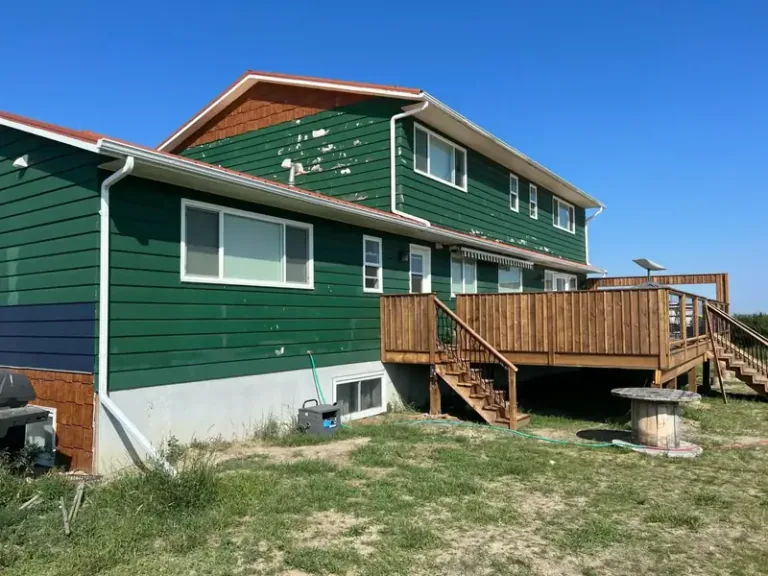
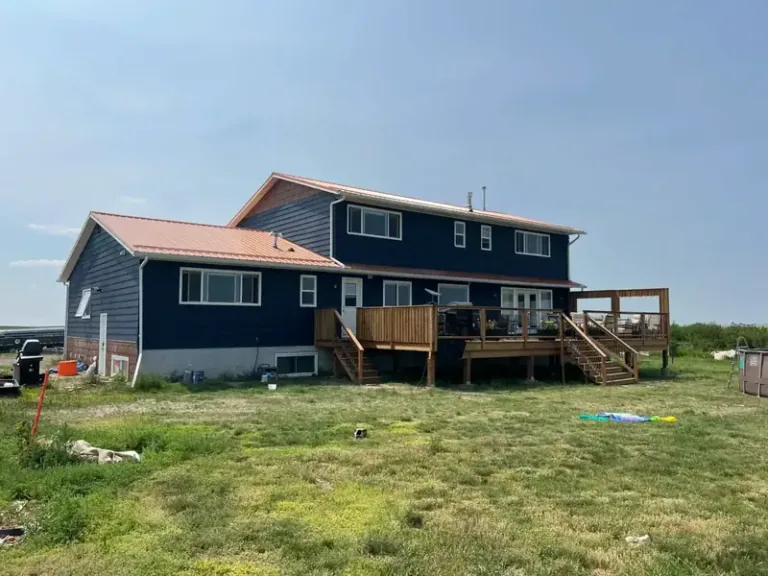
Considering a similar change? We assess your siding and existing coating before specifying preparation, primer and finish coats.
A Calgary exterior may combine wood, engineered siding, metal and masonry. Each surface gets its own preparation and product decision.
Condition, chalking, adhesion and exposure are reviewed before the coating system is selected.
Weathered wood, SmartSide and other exterior products require surface-specific preparation.
Fascia, battens, window details and accent elements are scoped individually.
Brush, roll or spray application is chosen for the substrate and finish expectations.
Previously coated railings, doors and accents are assessed for corrosion, adhesion and compatible primers.
Homes with several substrates receive a coordinated plan—not one product applied everywhere.
The written scope should explain both what will be painted and what must happen before painting begins.
Review adhesion, chalking, damage, joints, moisture clues, access and exposure.
List the surfaces, preparation, products, colours and application approach in writing.
Clean, repair, scrape, sand, caulk, prime and mask according to the actual conditions.
Work within product and weather requirements, then complete a final walkthrough.
Direct sun, wind, sudden temperature swings, rain risk and surface moisture can all change how an exterior coating applies and cures.
Dynamic Painting uses professional Graco equipment, including 695, 495 XT and QuickShot systems, when spraying provides the right control and finish. Brush-and-roll methods remain the better choice when wind, detail, access or the substrate calls for them.
Professional exterior house painters should explain what happens before the finish coat. Calgary properties often combine weathered siding, painted trim, garage doors, exterior wood and masonry, so preparation cannot be reduced to one generic checklist.
Dust, chalking paint and loose previous finishes can interfere with adhesion. Washing pressure, scraping, sanding and drying time should match the material, while soft wood or persistent moisture needs further assessment before painting.
Garage doors, painted siding, SmartSide, wood trim and metal details do not automatically accept the same primer or finish. We identify the surface, existing coating, access and desired result before choosing a compatible system.
A south-facing elevation can behave differently from a shaded wall. Surface temperature, airborne dust, recent moisture and the product’s technical requirements all affect when exterior painting can reasonably proceed.
Explore our complete painting preparation guide or the dedicated exterior paint preparation article. For masonry-specific work, visit our stucco painting and repair service.
Open a product below to see where it may fit and what affects the choice. Use this guidance to compare options and prepare questions for your estimate; we confirm the system after assessing your surface and existing finish.
Browse 15 exterior painting photos in our Gallery →Filter by surface, colour words or project stage to find ideas for your home. Products shown above are options, not confirmed products used in these photographs.
Use these ranges to start planning your home’s exterior repaint. Surface condition, preparation, repairs and access all affect the final price.
| Home type | Planning range |
|---|---|
| Small bungalow | $5,000–$8,000 |
| Average two-storey | $8,000–$15,000 |
| Large home or estate | $15,000–$25,000+ |
These are planning ranges, not fixed quotes. Your written estimate confirms the included surfaces, preparation, repairs and coating system after an on-site assessment.
For more detail by home and surface type, read our Calgary exterior painting cost guide.
Get a project-specific estimateExterior timing in Calgary
Calgary exterior painting needs more than a warm afternoon. We consider surface temperature, moisture, rain risk, wind and manufacturer curing requirements before scheduling the right coating system. Booking ahead gives us more flexibility when the conditions are suitable.
“Their prep work is not average; this is a high quality company and so worth it.” — Jackie Millette · Interior and exterior customer
Read Jackie’s full Google review ↗
No upfront deposits. Payment upon completion. See more homeowner questions →
Looking specifically for masonry work? Visit our Calgary stucco painting service.
For coating specifications, see the Dulux Diamond Exterior product information.
Exterior painting depends on surface temperature, moisture, wind, rain risk and the product requirements—not the calendar alone. Dynamic Painting schedules and applies coatings within suitable conditions for the specified system.
Preparation may include washing, drying, scraping, sanding, repairing, caulking, spot priming and masking. The exact steps depend on the surface and its condition.
Loose or poorly bonded material must be addressed first. Painting directly over peeling or chalking transfers the failure to the new coating and shortens its life.
The product is matched to the substrate and exposure. Dynamic Painting commonly specifies premium exterior systems such as Dulux Diamond Exterior Matt and appropriate Benjamin Moore coatings where they fit the project.
Yes, but stucco has its own repair, moisture and breathability requirements. See our dedicated Calgary stucco painting page for that service.
Our planning ranges are $5,000–$8,000 for a small bungalow, $8,000–$15,000 for an average two-storey home, and $15,000–$25,000 or more for a large home or estate. Amounts are in Canadian dollars. These are planning ranges, not fixed quotes: included surfaces, preparation, repairs, height and access determine your written estimate.
Exterior cleaning depends on the substrate and its condition. Dust, chalk, loose contamination and suitable biological growth should be addressed with a method that protects the material, followed by adequate drying before coating.
Weathered wood and trim are checked for loose coatings, damaged fibre, contamination, failed caulking and exposed areas. Scraping, sanding, repairs, suitable priming and drying are selected according to the actual surface and coating system.