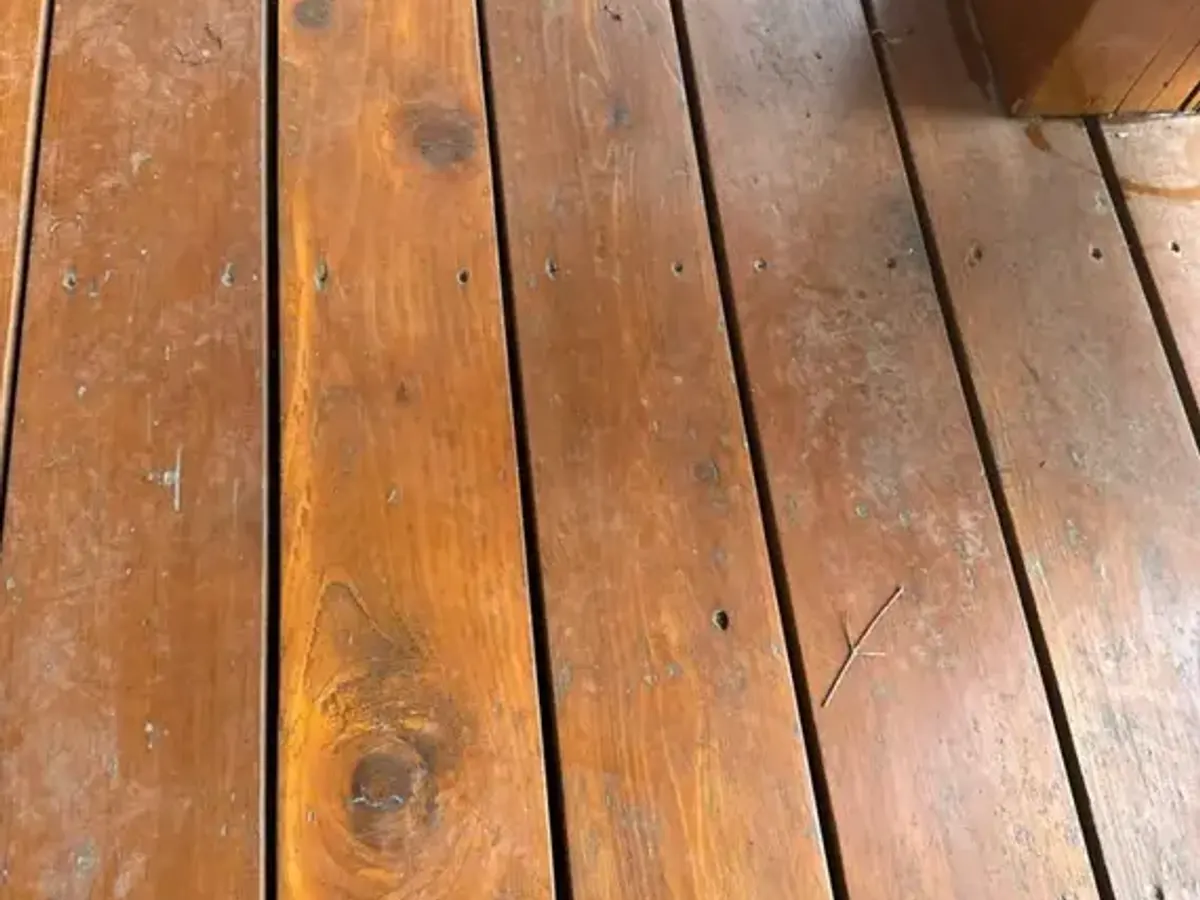
Deck sanding is useful when boards have rough fibres, uneven coating edges or a failed finish that needs removal. It is not automatically required every time a deck is stained. First identify the existing coating, the wood’s condition and the preparation instructions for the product you intend to use.
A restoration and a maintenance recoat are different jobs. Sanding every deck back to bare wood can add unnecessary work; putting fresh stain over an unsuitable surface can also lead to failure. The assessment determines which approach fits.
When cleaning is enough and when sanding helps
| What you find | Preparation to assess |
|---|---|
| Sound wood with a compatible, weathered penetrating stain | The manufacturer may allow cleaning, drying and a maintenance coat without stripping or heavy sanding. |
| Peeling paint or a failing film-forming stain | Remove the unstable coating. The product change and remaining finish determine whether stripping, sanding or both are needed. |
| Raised fibres, splinters or rough transitions | Local sanding may improve the surface after the cause and condition are assessed. |
| Soft, rotten, loose or structurally damaged boards | Repair or replace unsuitable material before coating. Sanding does not restore its strength. |
Pressure washing can remove dirt and help with cleaning, but it does not prove that a coating is ready for stain. Excessive pressure can damage wood. After cleaning, inspect the dried surface for loose finish, rough fibres and remaining contamination.
Match preparation to the selected stain
- Identify the wood and existing finish as closely as possible. Keep an old can or product record if available.
- Inspect boards, fasteners, edges, stairs and railings before using sanding equipment.
- Decide whether this is maintenance, a coating change or restoration. Follow the selected product’s cleaning and removal requirements.
- Sand only where the condition and coating instructions call for it. Choose an appropriate grit and remove the dust.
- Confirm the wood meets the product’s moisture and application requirements. Drying time after washing depends on conditions.
- Test the finish in an inconspicuous area and check colour and absorption before proceeding.
Product example: Ready Seal’s preparation FAQ does not recommend routine sanding before its stain. Where sanding is necessary, it specifies 60- or 80-grit paper followed by cleaning. Its maintenance instructions allow recoating existing Ready Seal without removing all of it. Those directions apply to that product, not every deck coating.
What makes deck sanding difficult?
Flat boards, edges and railings need different access and tools. Raised fasteners can damage abrasives; leaving a machine in one place can gouge soft wood. Check the surface frequently instead of trying to remove everything in one aggressive pass.
Before disturbing an unidentified old coating, assess whether hazardous material precautions are needed. A standard sanding setup is not a substitute for that assessment. Include protection of nearby surfaces, dust collection and cleanup in the work plan.
A useful estimate identifies the areas being sanded, how existing coating will be removed, any board repairs excluded from the painting scope, and the proposed stain. Square footage alone will not capture the work around spindles, stairs and tight edges.
Does new wood always need sanding?
No. New wood can still be too wet, too smooth or otherwise unready for a particular stain, but age alone does not establish the preparation method. Follow the stain manufacturer’s new-wood directions and assess absorption. Do not assume that fine sanding always improves penetration.
For scheduling after preparation, see how to choose a deck-staining weather window. For a product change, our paint-versus-stain guide explains the maintenance differences.
Deck sanding questions
Do I need to sand before every recoat?
No. A compatible maintenance coat on sound wood can require a different process from restoring peeling or heavily weathered boards. Use the current product instructions and the actual surface condition.
Is washing enough for a cedar deck?
It can be part of an appropriate maintenance process. If loose coating, damaged fibres or other defects remain afterward, additional preparation is needed. Cedar does not have one universal preparation recipe.
How much does sanding cost?
The scope depends on access, board condition, failed coating, detail work and whether stripping or staining is included. Ask for those items to be identified in the written estimate.
Can railings be sanded?
Yes, where suitable, but corners, profiles and spindles need separate attention. Their condition and access can account for a substantial part of the preparation work.
For an assessment of your existing finish and the appropriate preparation, see our deck and pergola refinishing service.