
Bubbling vs Cracking vs Flashing Paint: What Each Problem Really Means
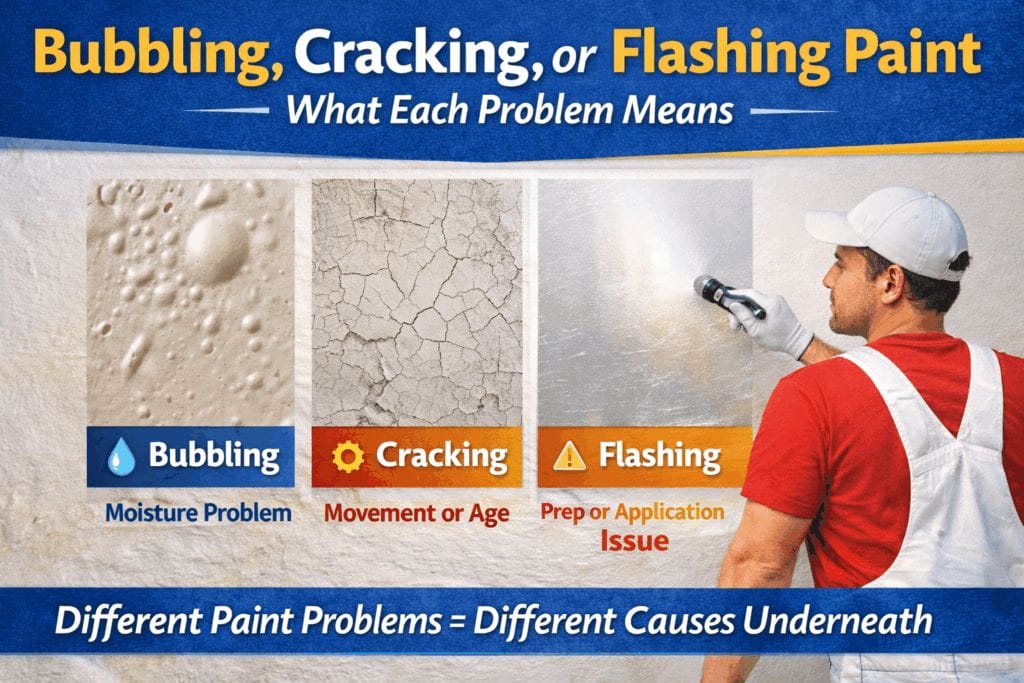
Not all paint problems look the same, and that matters more than most homeowners realize. Bubbling, cracking, and flashing paint are three different warning signs, and each one points to a different issue beneath the surface.
Too often, all three get treated the same way: repaint over the damage and hope it disappears. That usually does not work, because the appearance problem is only the symptom. The real issue is underneath.
Paint Problems Are Clues About What Is Happening Under the Surface
Paint is more than colour. It is part of a protective system, and when that system starts looking wrong, it is often telling you something important.
When paint begins bubbling, cracking, or flashing, it is usually a sign that adhesion has failed, moisture or movement is present, the surface was not prepared correctly, or the paint system was not suited to the conditions. These issues can show up indoors or outdoors, whether you are dealing with a small repair or a full repaint project.
Bubbling Paint Usually Points to Moisture or Adhesion Trouble
Bubbling paint shows up as raised blisters or soft bubbles beneath the surface. Sometimes they pop and peel. Other times they collapse and leave weak spots behind. Either way, the paint film is telling you something failed below the surface.
What bubbling usually means
- Moisture trapped behind the paint
- Painting over a damp surface
- Poor adhesion from surface contamination
- High humidity during application
Where bubbling often appears
- Bathrooms and kitchens
- Exterior walls exposed to rain or snow
- Around windows and doors
- Poorly ventilated rooms
Best rule: when paint bubbles, check for moisture first. If the source is still active, repainting alone will not solve the issue.
That is one reason professional interior painting work should always include attention to ventilation, substrate dryness, and the condition of the surface before a new coating system is applied.
Cracking Paint Usually Means Movement, Age, or Application Failure
Cracking paint shows up as visible lines or fractures in the surface. These can range from fine hairline cracks to deeper splits that expose the underlying layers. Unlike bubbling, cracking is often tied more closely to movement, brittleness, or a coating system that no longer has enough flexibility.
What cracking paint usually means
- Natural expansion and contraction of the surface
- Paint applied too thick
- Low-quality or brittle paint
- Skipped primer on repairs
- Paint reaching the end of its lifespan
Where cracking is common
- Older homes
- Exterior siding and trim
- Areas exposed to major temperature swings
- Surfaces with old layered coatings
Once cracks form, moisture can begin entering the system. That is when cracking can turn into bubbling or peeling if it is not corrected properly.
Flashing Paint Is Usually a Prep or Patching Problem, Not a Colour Problem
Flashing paint occurs when parts of a wall look shinier or duller than the surrounding areas, even though the same paint colour was used. This is not usually a paint defect. It is almost always a surface or application issue that shows up after the finish dries.
What flashing usually means
- Uneven surface porosity
- Unprimed patching or repairs
- Inconsistent roller pressure
- Improper finishing technique
Where it shows up most
- After drywall repairs
- On patched wall areas
- Under natural or angled light
- On larger flat walls with uneven absorption
Bubbling vs Cracking vs Flashing at a Glance
| Problem | What It Looks Like | Most Likely Cause | Wrong Fix |
|---|---|---|---|
| Bubbling | Raised blisters or soft bubbles in the paint film | Moisture, damp substrate, or adhesion failure | Paint over it without finding the moisture source |
| Cracking | Hairline cracks, splits, or fractured paint film | Movement, brittle paint, heavy build, or aging coatings | Fill visually and repaint without stabilizing the system |
| Flashing | Uneven sheen, dull spots, or shiny patched areas | Uneven porosity, poor priming, or bad finish technique | Try random touch-ups without correcting the surface |
These Paint Problems Are Not Interchangeable, So the Fix Cannot Be Either
Bubbling, cracking, and flashing are not the same issue, which means treating them all with the same quick repaint almost guarantees disappointment. Spot painting, rolling over damaged areas, switching paint brands, or relying on “paint and primer in one” products usually does not solve the actual cause.
Quick fixes that often fail
- Spot painting over visible damage
- Rolling one more coat over the area
- Changing brands without changing prep
- Assuming a stronger paint will hide the issue
What lasting repairs require
- Identify the exact paint failure pattern
- Diagnose the substrate and surface condition
- Fix the cause first
- Use the correct primer and finish method
Without proper preparation, the issue usually comes back, and sometimes worse than before.
If the Symptom Is Misread, the Repair Usually Fails Too
One of the biggest differences between a short-lived repaint and a long-lasting one is whether the painter understands what the paint problem is actually saying. Bubbling, cracking, and flashing all require different fixes because they come from different causes.
Professionals Do Not Guess. They Diagnose.
A proper assessment goes beyond the visible damage. Professional painters evaluate the entire system so the repair method matches the real cause instead of just the symptom.
- Identify moisture sources and humidity issues
- Evaluate surface adhesion and old coatings
- Inspect repairs, patches, and porosity differences
- Review whether primer was used correctly
- Select products based on actual surface conditions
This is part of what separates a lasting finish from a short-term cosmetic patch.
The Best Repair Is Often the Problem You Never End Up Having
The most effective way to deal with bubbling, cracking, and flashing paint is to prevent them from happening in the first place. That means building the coating system properly from the start.
Prep thoroughly
Clean the surface, remove weak material, sand where needed, and do not rush preparation.
Prime correctly
Prime repairs, porous areas, and substrates that need a bonding or sealing layer before topcoating.
Control moisture
Manage humidity, dryness, and ventilation before applying new paint.
Choose the right products
Use coatings suited to the environment instead of relying on generic one-size-fits-all solutions.
Respect conditions
Apply paint under proper temperature and humidity conditions for cure and adhesion.
Finish consistently
Use proper roller pressure, coverage, and technique so the sheen and texture stay even.
Paint Problems Are Signals, Not Mysteries
Bubbling, cracking, and flashing paint are not random defects. They are visible clues that something about the surface, environment, prep, or coating system is off. Once you understand what each one means, it becomes much easier to fix the problem properly the first time.
FAQ
What is the difference between bubbling and cracking paint?
Bubbling usually points to moisture or adhesion trouble beneath the paint film, while cracking usually points to movement, aging paint, brittle coatings, or application failure.
Is flashing paint a paint defect?
Usually no. Flashing is most often caused by uneven surface porosity, unprimed patches, or inconsistent finishing technique rather than the paint colour itself.
Can I just repaint over bubbling or cracking paint?
Not if you want it to last. Repainting without solving the actual cause usually leads to repeat failure.
Why does flashing show up after drywall repairs?
Because repaired areas often absorb paint differently than the surrounding wall if they were not primed evenly before finishing.
Which paint problem is most related to moisture?
Bubbling is the one most commonly tied to moisture, damp surfaces, or humidity-related adhesion issues.
How do professional painters stop these issues from coming back?
They identify the exact symptom, diagnose the cause, correct the surface or environmental issue, and rebuild the paint system properly with the right prep and primer.
Seeing Bubbling, Cracking, or Uneven Paint?
If you are seeing bubbling, cracking, or flashing paint, do not guess and do not cover it up blindly. A professional assessment can identify the real cause and help prevent repeat failures before you spend money repainting the same problem twice.
- Clear diagnosis before repainting
- Better prep and repair strategy
- More durable results that actually last