
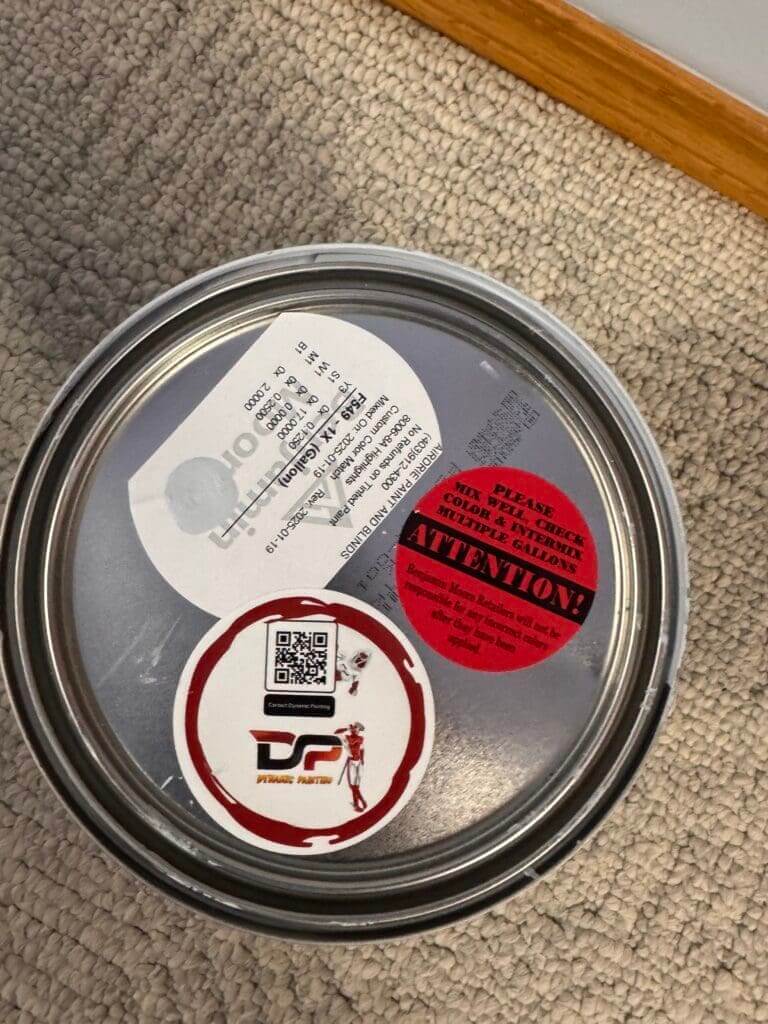
Painting a room is one of the easiest ways to refresh your home—but what happens to the leftover paint? Instead of throwing it out, properly storing your paint allows you to reuse it for touch-ups, future projects, or even refinishing furniture. The key is storing it correctly. If not, paint can dry out, separate, or become unusable much faster than expected.
Here are expert-approved tips to help you store paint the right way and extend its lifespan.
Seal the Lid Properly to Prevent Air Exposure
Air is the number one reason paint goes bad. Even a slightly loose lid can cause paint to thicken, skin over, or dry out completely.
Pro Tip: Before sealing the can, wipe the rim clean with a damp cloth to remove excess paint. Then place the lid on evenly and use a rubber mallet to gently tap it closed. Avoid using a hammer—it can warp the lid and break the seal.
Store Paint in a Temperature-Controlled Space
Extreme temperatures can ruin paint quickly. Freezing conditions can permanently damage the chemical structure, while high heat can cause separation and spoilage.
Best practice: Store paint in a cool, dry, and stable environment like a basement, closet, or utility room. Avoid garages and sheds—especially in Alberta—where temperatures fluctuate dramatically.
Label Everything Clearly for Future Use
Leftover paint is only useful if you know what it was used for. Without proper labeling, you risk wasting time—or worse—using the wrong color for touch-ups.
Include these details:
- Room or area used
- Color name and brand
- Finish (eggshell, satin, etc.)
- Date stored
Transfer Small Amounts to Airtight Containers
If you only have a small amount of paint left, storing it in a large can allows too much air inside. This speeds up deterioration.
Instead, transfer leftover paint into a smaller airtight container like a mason jar or sealed plastic container. This reduces oxygen exposure and helps preserve the paint longer.
Always Check Paint Before Reusing It
Before using stored paint, inspect it carefully to make sure it’s still good.
- Good paint: Mixes smoothly and has a normal smell
- Bad paint: Strong foul odor, chunky texture, or won’t mix properly
If the paint has separated, try stirring it thoroughly. However, if it smells off or has hardened clumps, it’s best to dispose of it safely.
Common Mistakes to Avoid When Storing Paint
- Leaving paint cans partially open
- Storing paint in freezing temperatures
- Using damaged or bent lids
- Not labeling containers
- Keeping paint in direct sunlight
Avoiding these simple mistakes can easily double the usable life of your leftover paint.
Now, If You’d Rather Let a Pro Handle It…
If dealing with leftover paint, touch-ups, or full repainting feels like more work than it’s worth, it might be time to bring in professionals. At Dynamic Painting, we handle everything from small fixes to full interior and exterior transformations—so you don’t have to worry about storage, prep, or cleanup.
Whether you’re refreshing a single room or updating your entire home, our team delivers clean, consistent, high-quality results backed by experience and attention to detail.